5 November, 2025
Improving the Mealtime Experience for People with Dementia -
The Power of Microlearning
Microlearning provides short, focused, bite sized education in an easily accessible format. In this case, an online microlearning module, “Improving the Mealtime Experience for People with Dementia”, was designed and developed by a multidisciplinary team from the Regional Specialist Memory Clinic and the Dementia Services Information and Development Centre (DSiDC) in St. James’s Hospital (SJH). This digital solution provides staff with practical and empathetic tips to support a person with dementia at mealtimes in a 5–10 minute focussed online module.
For many people with dementia, coming into a busy hospital can be a scary and overwhelming experience. The surroundings, sounds and people are unfamiliar. The noise of bleeps, phones, TVs, staff and other patients are loud and distracting. In addition, it can be difficult for a person with dementia to communicate their needs, including basic needs such as hunger, thirst, pain, fear and needing the toilet. These factors are known as “unmet needs”, and if overlooked, can cause a person with dementia to become distressed or upset in hospital.
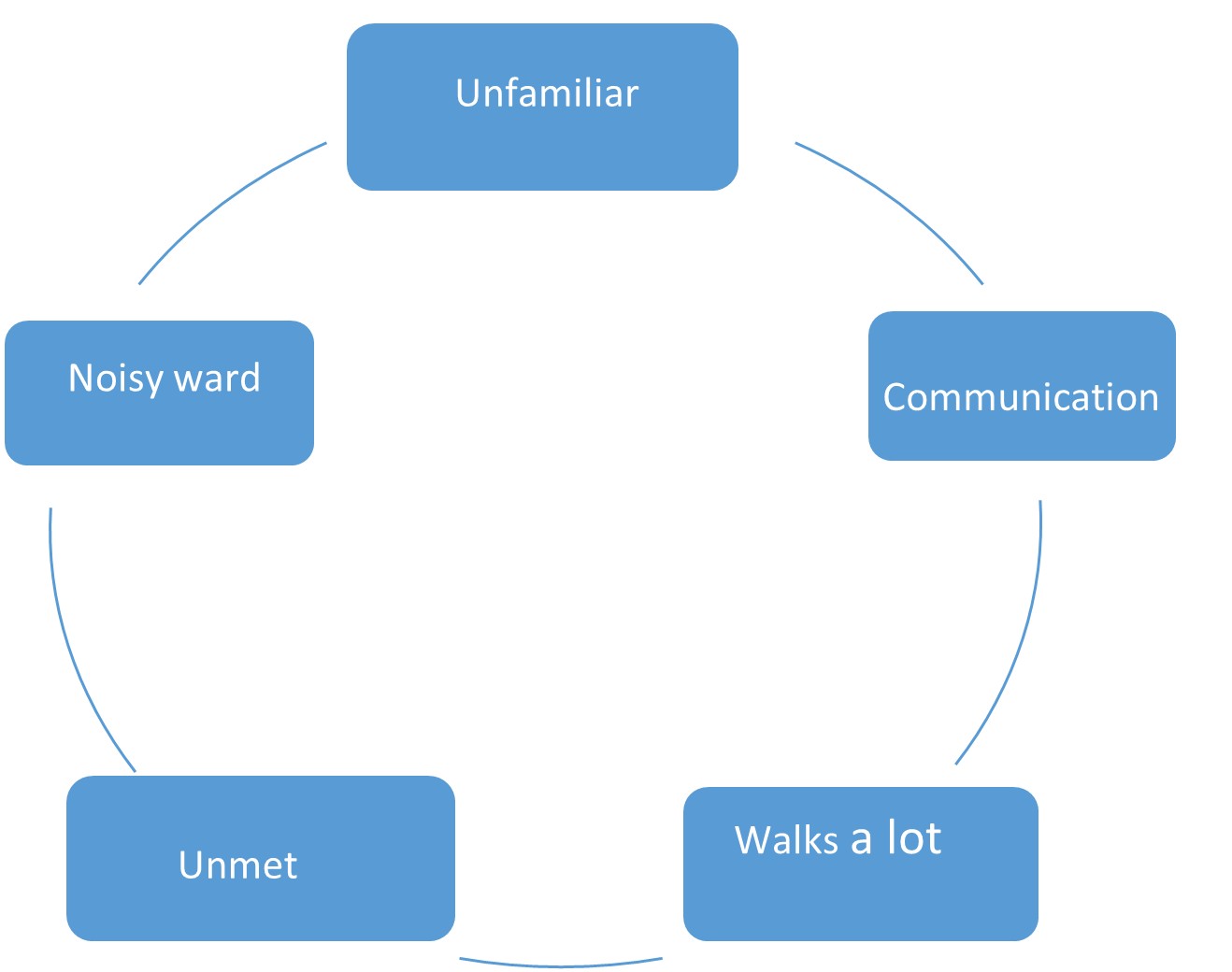
In addition to the environmental challenges in hospital, there may be nutritional challenges. Eating and mealtimes are an important part of a person’s daily routine, and adequate nutrition contributes to rehabilitation and recovery in hospital. However, a person with dementia may find it difficult to see food on a plate or recognise what the food is. They may forget how to eat or how to use a knife and fork. They may become distracted by noise, other patients or clutter on the table. They may also have difficulty chewing or swallowing food, chopping up food or opening sachets and packets. These factors all contribute to a person’s worry or upset at mealtimes, and reduce their nutritional intake and enjoyment of mealtimes.
Designing an Online Training Module for Staff
In 2024, a Working Group was set up comprising Clinical Nutrition, SLT and the DSiDC to design and develop an online education and training module intended to enable staff to support the mealtime experience for people with dementia in hospital.
The aims of the module were to:
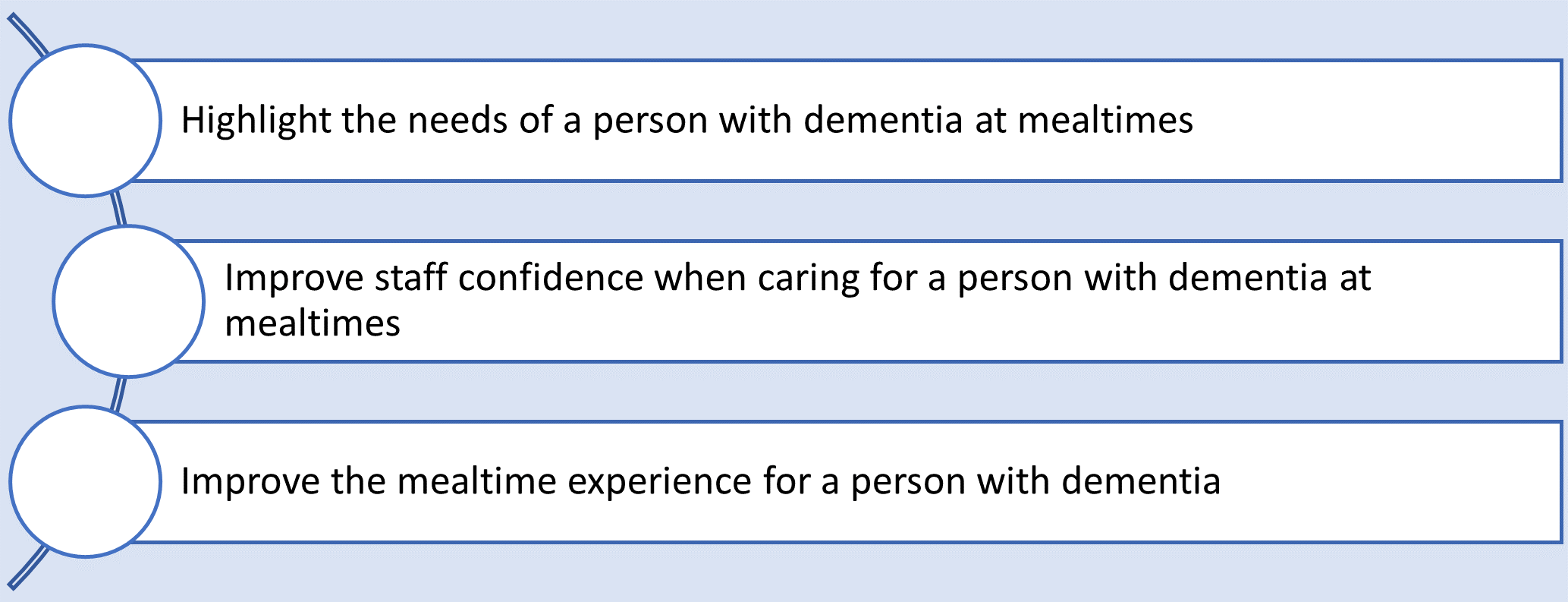
The Working Group, with input from Nursing, Healthcare Assistants (HCA) and Catering colleagues, created a microlearning module called “Improving the Mealtime Experience for People with Dementia”. This module provides specific, targeted information on positioning for mealtimes, ensuring “unmet needs” are met, the presentation of the meal itself, and reducing distractions at mealtimes for people with dementia. The module also includes an audio section outlining challenges facing a person with dementia on a busy ward, and provides questions and scenarios to reinforce learning.
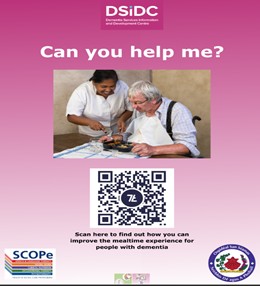
The module has been used to educate staff across the Medicine for the Elderly wards in SJH since 2024, and was launched throughout all SJH wards in 2025. It is available through a QR code on a ward poster, and through a link on the DSiDC section of the SJH INTRANET.
Outcomes from the Module
A pilot of the module showed 398 users completed the module. The largest audience were Nursing and HCA staff (39% and 24% respectively), followed by Catering Assistants (11%). Before completing the module, 42% of users reported feeling “very confident” to prepare a person with dementia for mealtimes. This increased to 77% after completion of the module. 87% of users reported “learning something new”, while 98% of users would recommend the module to a colleague.
The module was accepted as an abstract and poster at the Alzheimer’s Disease International Conference in Poland in April 2024, and was commended at the HSE Excellence Awards 2024.
As mentioned, the microlearning module is available on the DSiDC website (www.dementia.ie), meaning this digital solution is available as a national resource to support staff all over the country, in hospitals, nursing homes and institutions to improve the mealtime experience for people with dementia.
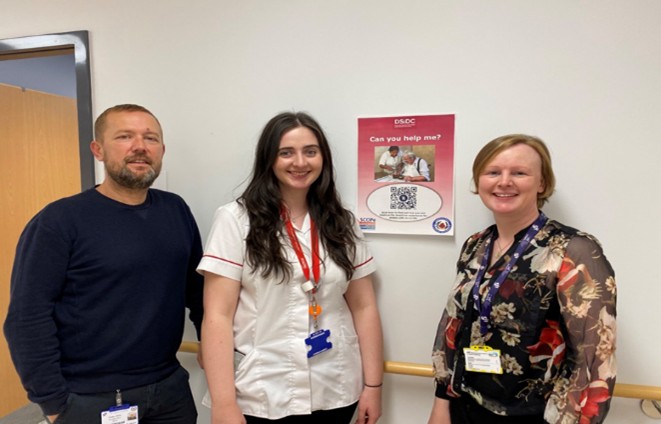
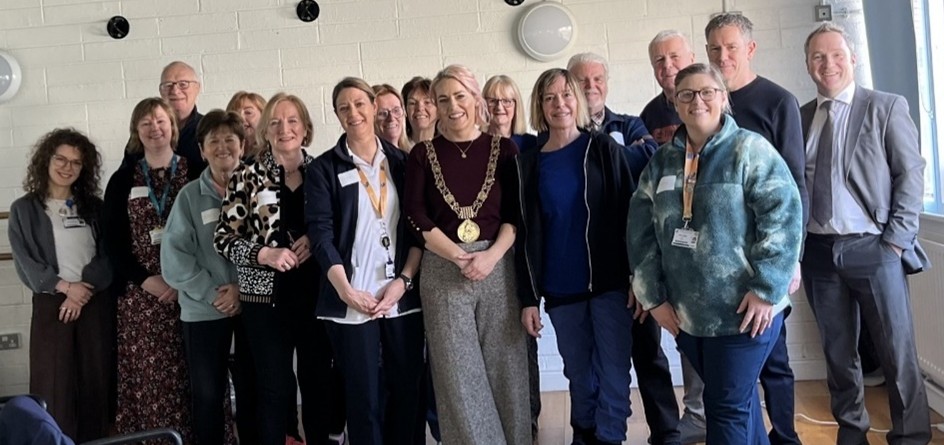
Photo: L-R - Darko Zrnic (DSiDC), Kate Griffin, (SLT) and Tracey Waldron (CN)