6 February, 2026
At the Regional Specialist Memory Clinic at St. James’s Hospital, one of four such clinics in Ireland, we provide advanced assessment, diagnosis, and multidisciplinary support for individuals with cognitive conditions, including Mild Cognitive Impairment and Dementia. Among these, Primary Progressive Aphasia (PPA) presents a unique challenge, one where Speech and Language Therapists (SLTs) play a pivotal role.
What is Primary Progressive Aphasia (PPA)?
PPA is a form of dementia where speech and/or language abilities decline over time, with minimal impact on other cognitive domains in the early stages. This condition worsens over time and can significantly affects daily communication and quality of life.
There are three main variants of PPA, each with distinct features:
- Non-fluent variant PPA (NfvPPA): Effortful, slow, and hesitant speech; difficulty pronouncing words; grammatical errors.
- Semantic variant PPA (SvPPA): Loss of word meanings; gradual erosion of vocabulary knowledge.
- Logopenic variant PPA (LvPPA): Frequent pauses while searching for words; difficulty repeating phrases; problems with sentence comprehension.
There are specific diagnostic criteria for each variant and this can be evaluated by a SLT during an assessment process (Gorno-Tempini et al, 2011).
Why Accurate Diagnosis Matters
Identifying the correct PPA subtype can indicate the underlying pathology and guide treatment. For example, LvPPA is often associated with Alzheimer’s disease pathology, making patients eligible for cholinesterase inhibitors (e.g., donepezil, rivastigmine) and potentially future disease-modifying treatments.
Accurate diagnosis also resolves any uncertainty experienced by patients and their families as well as enabling future planning and ensuring access to services and support (Belder et al, 2024).
The SLT Role Post-Diagnosis
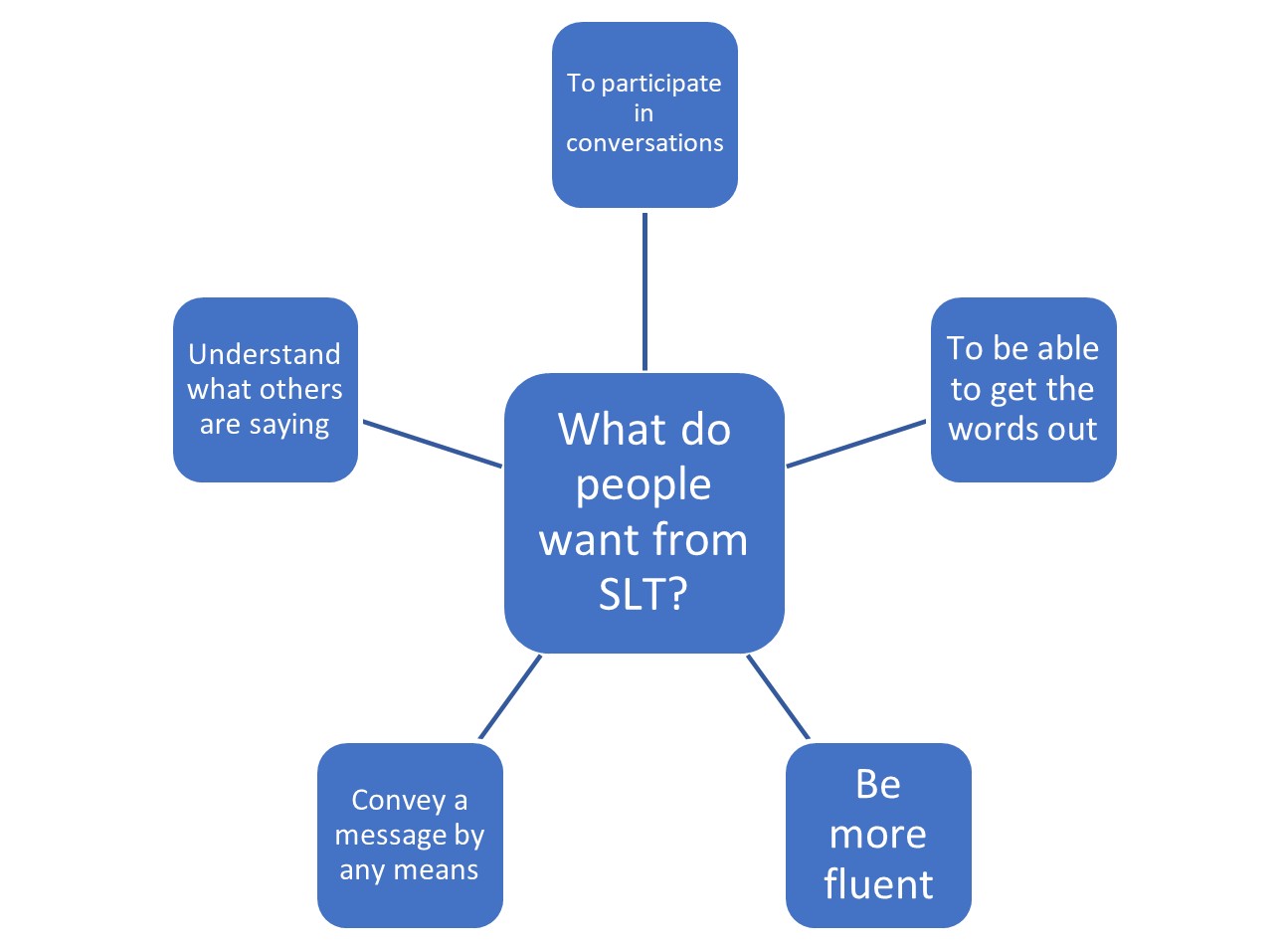
SLTs continue to support individuals with PPA beyond diagnosis, helping them achieve meaningful communication goals. According to Volkmer et al. (2022), patients value interventions that maintain autonomy, reduce frustration, and support relationships. See diagram below.
Key SLT Interventions for PPA
- Communication Partner Training (CPT): Enhances conversations by working with both the person and their communication partners (Volkmer et al, 2018). Uses video analysis to identify barriers and facilitators.
- Word Finding Strategies: Lexical retrieval treatments uses a hierarchy of semantic, orthographic and phonological cues to improve naming (Croot et al, 2019).
- Script Training: Patients develop and practice personalised scripts for daily interactions. This results in improved fluency and intelligibility (Talbot et al, 2025)
- Alternative and Augmentative Communication (AAC): Low-tech aids such as communication books and high-tech aids such as Grid Player apps).
- Peer Support: We refer many of our patients to the Everactive Programme (see previous HSCP Voice blog). They have the opportunity to share experiences with other patients with a PPA diagnosis. We have plans for an online support group for communication partners to share stories of communication successes and challenges.
Looking Ahead
Understanding the distinct features of each PPA syndrome is essential for effective diagnosis and management. A structured clinical approach, combined with ongoing research into biomarkers and therapeutic interventions, offers hope for improving outcomes for individuals living with PPA.